Student Panel Analysis on Union Budget 2026 under “Yuva Prajna – Youth Voice of PIM”
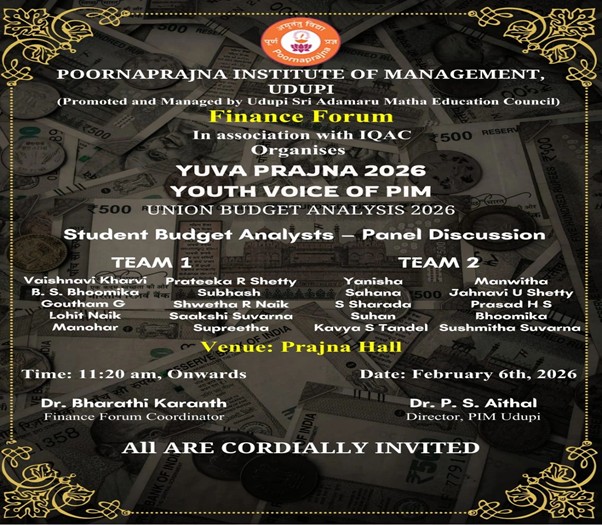
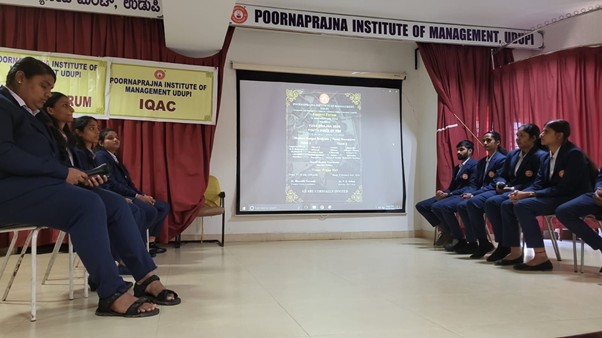
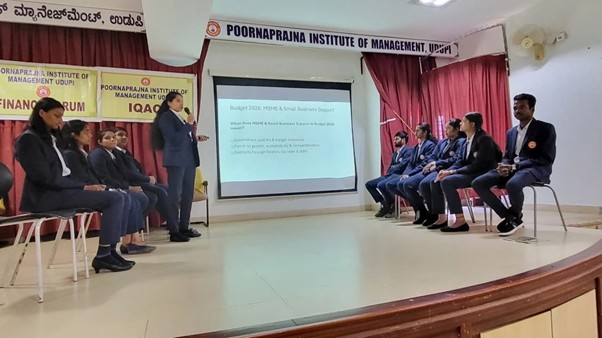
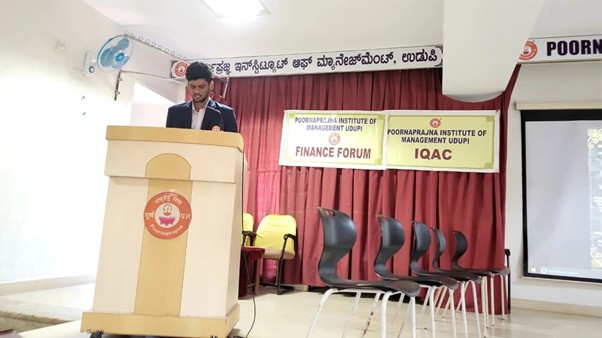
Poornaprajna Institute of Management (PIM) organized a Student Panel Analysis on the Union Budget 2026 under its vibrant student platform “Yuva Prajna – Youth Voice of PIM” on 6th February 2026. The programme was thoughtfully conducted by the Finance Forum of PIM, reflecting the institute’s commitment to nurturing analytical thinking and financial awareness among management students. The event featured two student panels, each comprising ten members, who engaged in structured and insightful discussions on the Union Budget and its far-reaching implications.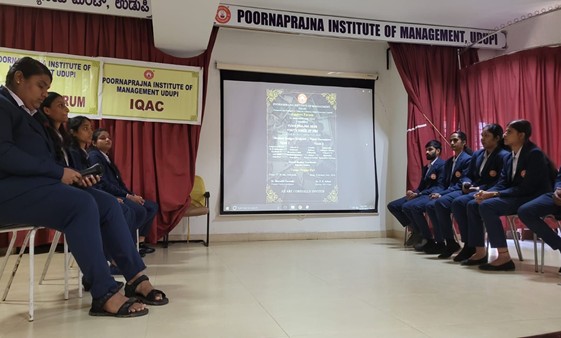
Introductory Session
The programme commenced with an informative introductory presentation by Meghana and Prajna, who traced the evolution of the term “Budget.” Their presentation offered a historical perspective, covering the concept of budgeting from Ancient India, through the Medieval and British periods, to its role and significance in Modern India. This session effectively set the context for the discussions that followed. 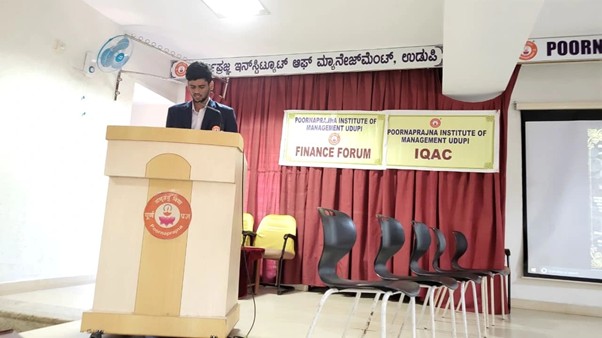
First Round of Panel Discussion
The first panel focused on a comprehensive sector-wise analysis of the Union Budget, examining allocations, comparing them with previous budgets, and evaluating their economic implications.
Student Panelists:
Vaishnavi, Sakshi, B. S. Bhoomika, Goutham, Adarsh, Lohith, Manohar, Subhash, Shwetha, and Supreetha.
Key Sectors Analyzed:
- Agriculture and Rural Development
- Infrastructure and Capital Investment
- Social Sector Spending
- Tourism and Logistics
- Financial Sector Reforms
- Taxation Policies
- MSME and Startup Ecosystem
- Fiscal Deficit and Debt Management
- Sustainability and Green Economy
- Impact on IT, Pharma, and Other Industries
The panel presented well-researched viewpoints, highlighting both opportunities and challenges arising from the budgetary provisions. 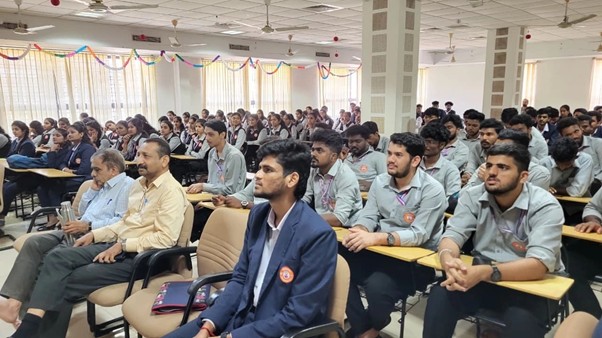
Second Round of Panel Discussion
The second panel explored several contemporary and debatable themes emerging from the Union Budget, encouraging critical evaluation and diverse perspectives.
Student Panelists:
Sushmitha, Sharada, Manvitha, Bhoomika, Yanisha, Prasad, Sahana, Kavya, Suhan, and Janahavi.
Major Issues Debated:
- Fiscal Discipline vs. Economic Growth
- Effectiveness of Capital Expenditure
- Government Expenditure vs. Private Investment
- Impact on the Stock Market
- Revenue Maximization through Taxes vs. Social Welfare and Growth
- Foreign Grants: Strategic Investment or Misplaced Generosity?
- Adequacy of Measures to Attract Global Capital
- Support for MSMEs and Small Businesses
- Technology-led Growth
- Energy Security vs. Clean Energy Transition
The discussions reflected strong analytical depth, with students demonstrating their ability to interpret policy measures and assess their broader economic consequences. 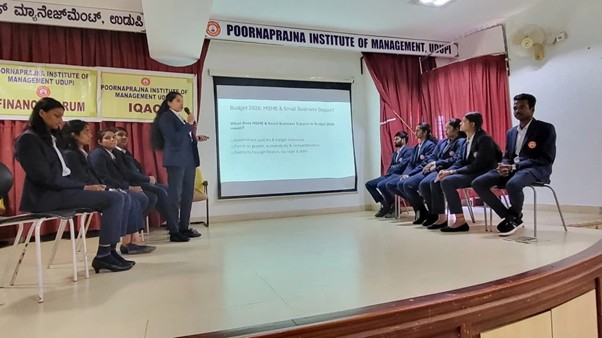
Moderation and Expert Insights
Mr. Rajendra Hebbar, President of the Finance Forum, efficiently coordinated and moderated both panel discussions, ensuring a smooth flow of ideas and meaningful engagement.
The programme was further enriched by the expert observations of Dr. Krishna Kothai, Dr. Bharath, and Dr. M. R. Vasudeva, who shared their professional insights on the Union Budget and provided constructive feedback to the student panelists, enhancing the academic value of the event. 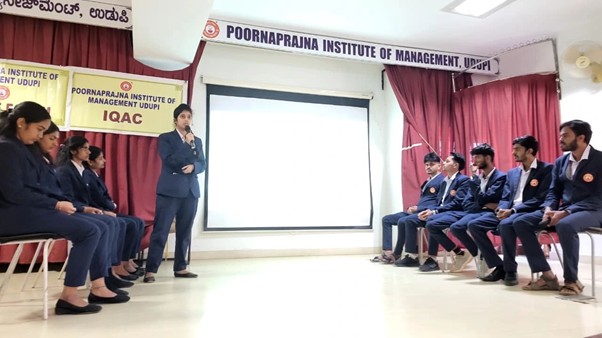
Programme Coordination and Participation
The event was coordinated by Dr. Bharathi Karanth, Faculty Coordinator of the Finance Forum, whose guidance played a crucial role in the successful execution of the programme.
The session witnessed active participation from all MBA faculty members, along with first-year and second-year MBA students, who engaged in thoughtful interactions with the panelists. The programme fostered a stimulating academic environment, encouraging students to critically analyze national economic policies while strengthening their presentation and discussion skills.
Overall, the Student Panel Analysis on Union Budget 2026 stood as a testament to PIM’s dedication to experiential learning. By providing a platform for informed dialogue and intellectual exchange, the institute continues to empower future managers to become responsible, knowledgeable, and proactive contributors to the economy.