The Department of Management Studies hosted the first session of Prajna Vaibhavam (PV) for the year 2026 for the MBA Batch of 2025–27 on Thursday, 19th November 2026 at PV Hall, PIM. This session continued the exciting academic journey for the existing batch, now in their second year, with a Group Discussion (GD) activity designed to build critical thinking, communication skills, and teamwork among second-year students.
The event commenced with the Master of Ceremony, Mr. Chirag (II MBA – Section B), who extended a warm welcome to the dignitaries, including Dr. P. S. Aithal (Director, PIM), Dr. Krishna Kothai (Professor Emeritus, PIM), Prof. Venkatesh Shetty, Prof Shivanand M Bhandarkar (PV Coordinators), faculty members, staff, and all participants. The session began on an energetic note, with an inspiring message that encouraged students to break boundaries and pursue their dreams—setting a positive tone for the discussions ahead.
Ms. Chaithra (II MBA – Section B) delivered the formal welcome address, after which the GD rounds began. Ms. Deeksha (II MBA – Section B) served as the timekeeper, clearly explaining the 15-minute discussion format and feedback process. The judging panel included Prof. Shivanand M Bhandarkar and Prof. A.P. Kodancha, who observed and evaluated the discussions.
Three groups participated, each sharing thoughtful views on interesting and relevant topics:
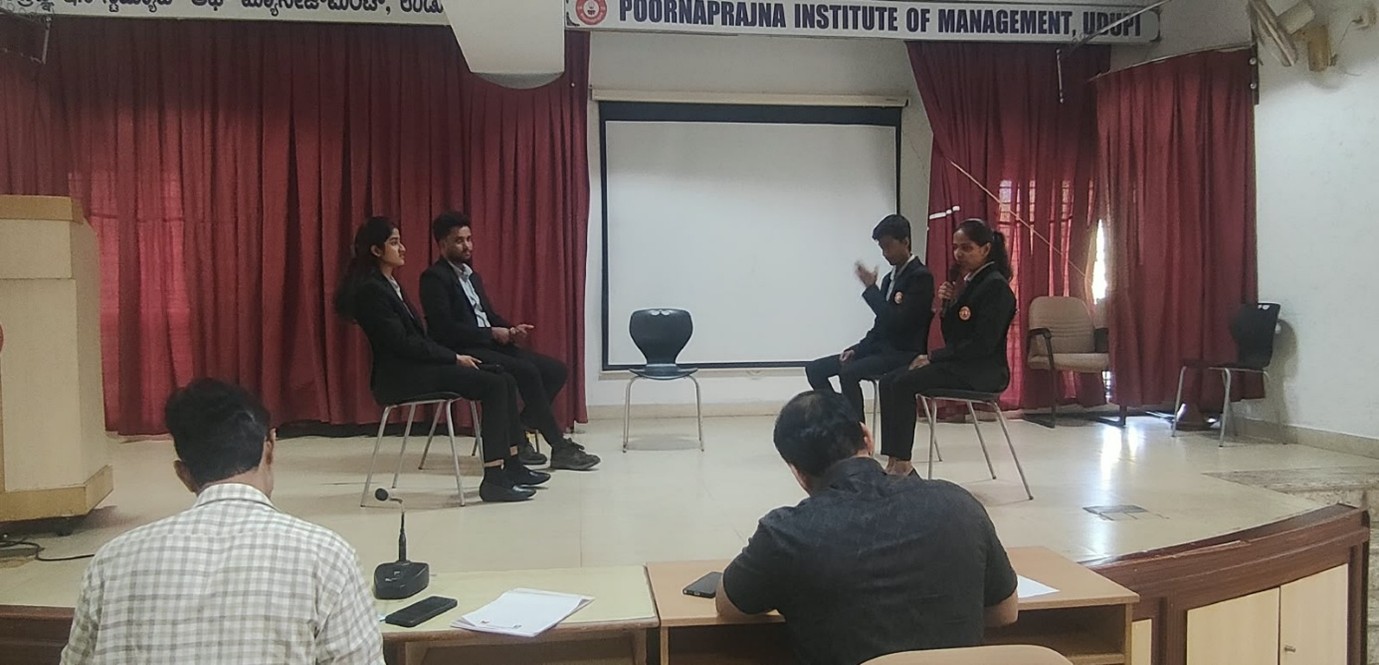
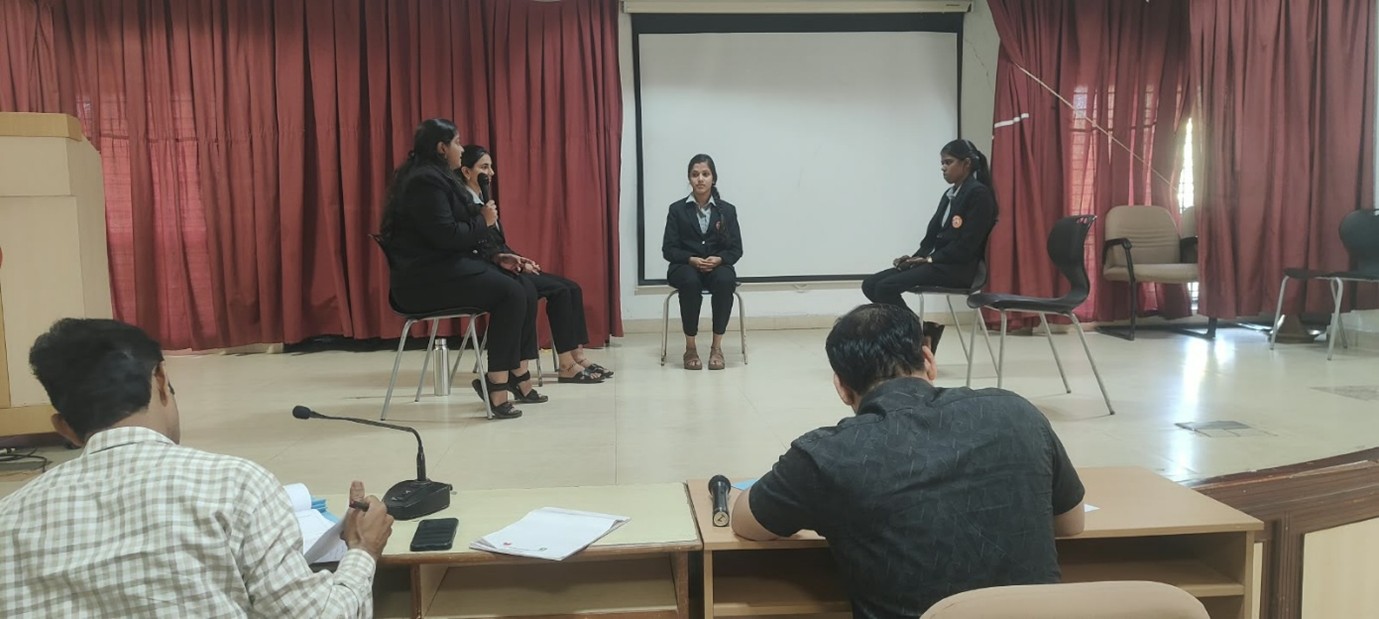
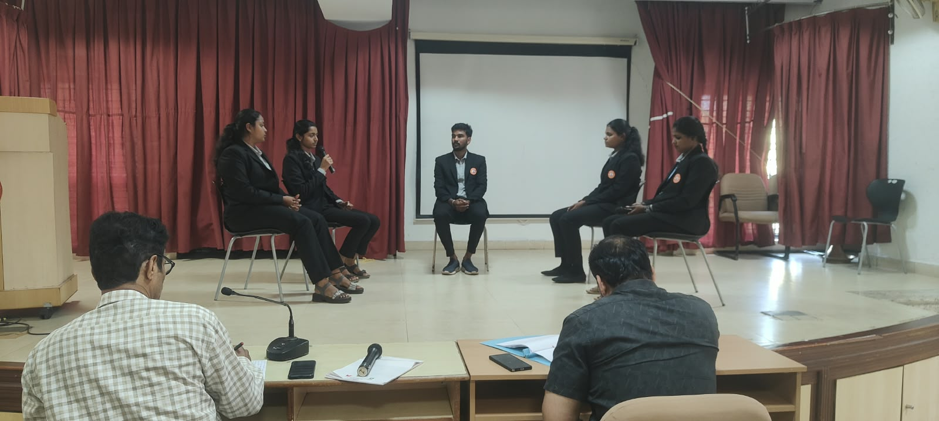 Group M
Topic: “Atmanirbhar Bharat – Call for Self-Reliance”
This group examined about Atmanirbhar Bharat which means making India self-reliant by strengthening domestic industries, technology, innovation and manufacturing. It was introduced by Prime Minister Narendra Modi in May 2020 during the COVID-19 pandemic. The main objective is to reduce unnecessary dependence on other countries and promote local production. Initiatives like Make in India encourage manufacturing and create employment opportunities. Supporting agriculture, MSMEs and small businesses helps strengthen the Indian economy. India is also progressing in technology through UPI, Chandrayaan-3, artificial intelligence and semiconductor manufacturing. Programs like Skill India and Startup India encourage skill development and entrepreneurship among youth. However, challenges such as dependence on foreign technology, financial difficulties for small businesses and maintaining international quality standards still exist. Atmanirbhar Bharat also focuses on defence production, renewable energy and global competitiveness. Ultimately, it is a shared responsibility of the government, industries and citizens to build a strong and independent India with the vision of “Make in India, Make for the World.”
Group N
Topic: “Do we need more entrepreneurs than managers”
This group discussed that entrepreneurs and managers are both important for the growth of businesses and the economy. Entrepreneurs create new businesses, introduce innovative ideas, take risks and generate employment opportunities. They help solve problems and contribute to economic development.
On the other hand, managers handle daily business activities, manage employees, control finances, make decisions and ensure that organisations achieve their goals.
Entrepreneurs create opportunities, while managers manage and develop those opportunities. Therefore, both roles are equally important.
Conclusion: We need both entrepreneurs and managers. Instead of comparing them, we should encourage entrepreneurship along with good management skills. Together, they can create successful businesses, increase employment and support India’s economic growth.
Group F
Topic: “Mass layoffs in IT industry – what is the future of IT jobs”
This group expressed the view point’s regarding about why IT companies are laying off employees, how AI and automation are affecting jobs, and how these layoffs impact employees and fresh graduates. We also discussed real-life examples, new job opportunities in AI, cybersecurity and cloud computing, and the importance of learning new skills.
Finally, we understood that IT jobs are not completely disappearing; they are changing with technology. Instead of fearing these changes, we should learn new skills and adapt to them.
Remember, those who are ready to learn and change will have a better future.